Old House Plumbing in Brighton
Most of this suburb's housing stock went up between the 1950s and the 1970s, and the last census counted 3,675 dwellings, 90 per cent of them detached houses. Plenty are weatherboard or fibro sitting on stumps.
If we're late, $100 comes off your bill

- Licensed and InsuredEvery job done by a licensed plumber. QBCC No: 15024607
- Fixed Quote FirstFlat-rate pricing, agreed before any work starts
- Lifetime Labour WarrantyBacked by our Fix-It-or-It's-Free guarantee (T&Cs apply)
- $0 Call-Out FeesNo extra charge for nights, weekends or public holidays
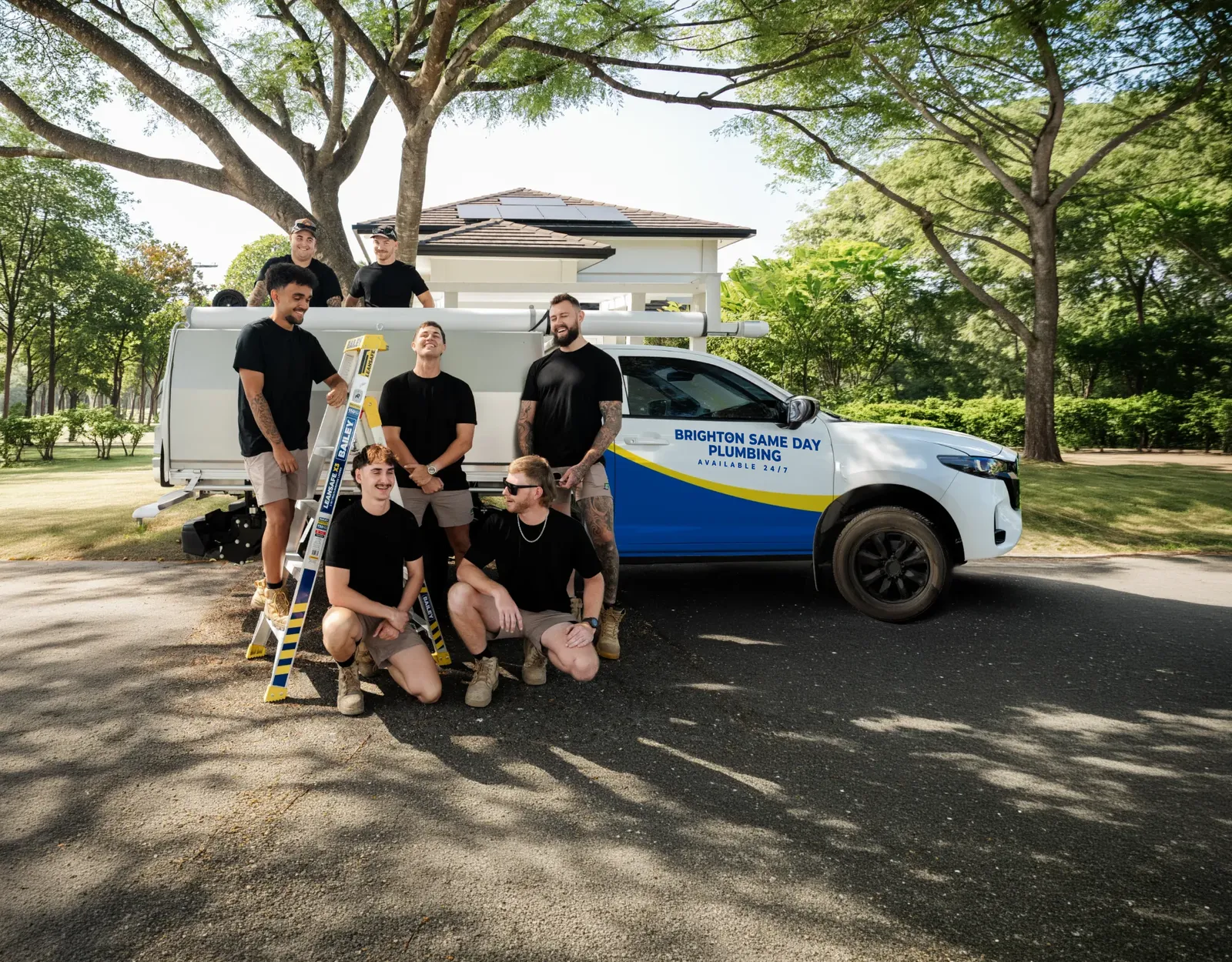
Old house plumbing in Brighton therefore means pipe runs slung beneath the floor, fittings layered in over the years, and renovation rules that switch on the moment walls open. Our team handles all of it, and every job is done by a licensed plumber, with $0 call-out fees and same-day where we can. The Brighton home page lists the full range of work we run across these older streets.
Signs of Trouble in Old Pipework You Can See
Stumped houses carry their water, waste and gas lines under the floor between the stumps, where you can look at them from below. Slab homes tuck most of that pipework in the slab or inside the walls, so reaching it means opening something up.
The signs that show without any demolition are the ones worth checking first:
- soil beneath a pipe that stays wet or soft
- drips sitting at the joints
- rust stains on the pipework and its brackets
- timber gone damp or dark near a run
- musty air hanging beneath the floor
One or two of these can mean a slow leak that has been running for months. The leak detection page walks through the meter test that confirms it, and banging or shuddering when a tap snaps shut is a different fault again, covered under water hammer repairs.
Rusty Water and Weak Flow in an Old House
Galvanised pipe is steel with a zinc coating, and once that coating wears through, the steel corrodes from the inside out. The tell-tale signs are rusty or brown water, flow that drops at several taps at once, and the same stretch leaking again and again.
A date worth knowing. Lead-based solder on brass fittings and copper pipes was common on Australian jobs up until 1989, so the age of the water service matters in any pre-1989 home.
Coastal moisture speeds the internal scaling that chokes galvanised lines, which is why flow drops before anything visibly leaks. Where the line has had enough, repiping old pipes in Brighton covers the replacement.
When Old Gas Pipework Needs a Gasfitter
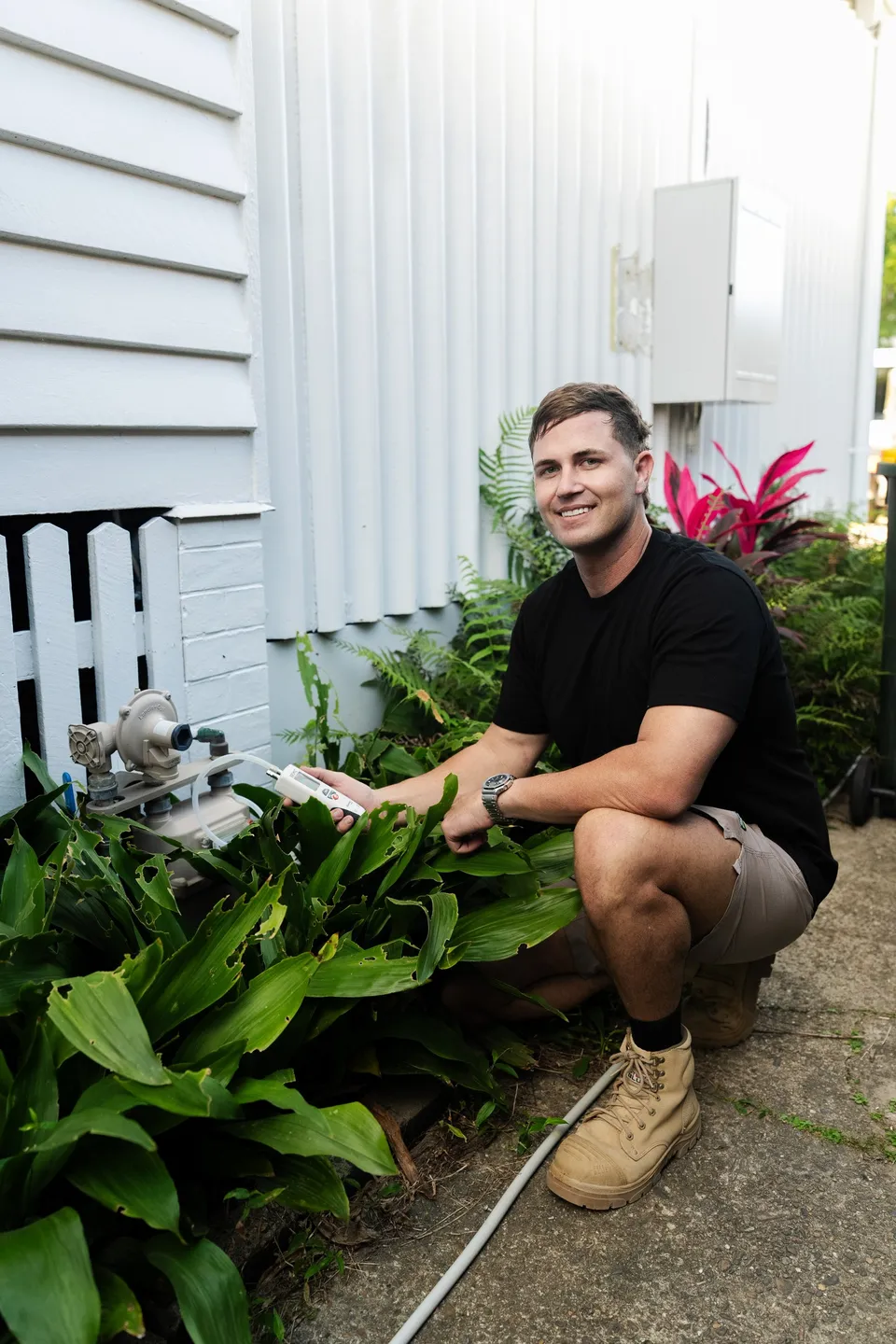
In Queensland, gas work is reserved for a licensed gasfitter: installing, altering, repairing, servicing or testing any gas system, its pipework or its connections. Owners can still keep an eye on things, since the state government advises looking gas systems over often for corrosion, decay or physical damage.
Two rules protect you here:
- Queensland law requires a gas worker with a safety concern about a system to give you a defect notice, unless the concern is put right immediately.
- Smell gas inside? Turn the appliance off, open up the house, and don't touch any light switch or power point. If the smell lingers, close the valve at the meter or bottle and ring (07) 3523 6484, or 000 if it won't budge.

What a Renovation Sets Off in an Older Home
A reno in a standing house is mostly notifiable work. Your plumber does it without a council permit, then lodges a Form 4 with the QBCC and hands you the copy. A house with drains laid and water connected counts as an existing building under the Regulation, which covers nearly every older home.
A few triggers change the category or add requirements:
Shared services
Where several homes share one combined drain, or the property runs on a dual reticulated supply, the job becomes permit work and the plumber applies to council before starting.
Temperature control
Each water heater we install or replace now needs a temperature control device, capping the water reaching your taps at 50°C. A brand-new shower or similar hygiene fixture calls for one too; swapping a washer or shower head does not.
Asbestos
Most houses built before 1990 contain some asbestos, so a reno on one of those needs extra care and can lift the price.
Old permits
A permit attaches to the premises rather than the owner, so one from decades back still binds whoever owns or lives in the place.
Postwar Cottages and the Ground Under Them
Most calls about aged pipework here come from the 1940s to 1960s weatherboard cottages that fill the suburb, the same era that put St Kieran's on Greenwood Street in 1960. A handful of pre-1940 cottages survive near the original village around Brighton Terrace, and those carry the earliest services of all.
The ground matters as much as the era. Reclaimed shoreline and tidal soils keep the space beneath the floor damp, so rust attacks fittings and pipe brackets faster than it would inland. A look down there answers most questions in minutes.
How an Older Home Job Runs
- 1

Call or message us
Ring (07) 3523 6484 or use the form and describe what's going on in Brighton. A few details up front mean the right gear comes on the first trip.
- 2

We inspect what's accessible
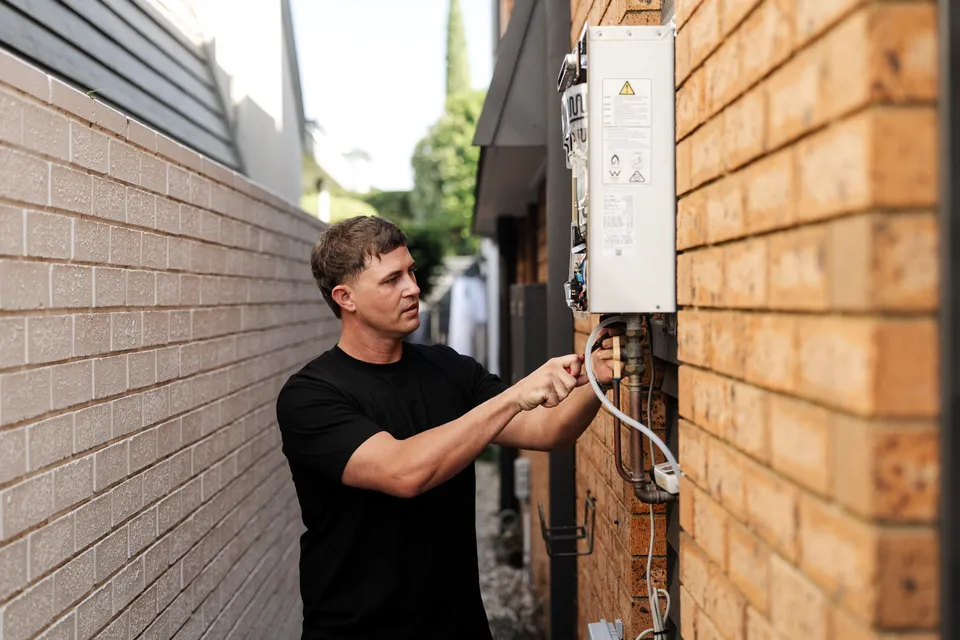
We get under the floor or into the cavity where the lines run. We note what each pipe is made of, the state it's in, and check flow, joints and gas connections before quoting any work.
- 3
Fixed quote, then the work
We give you a fixed quote before any work starts. It's flat-rate pricing with no hidden fees, and we only start once you approve it.
- 4

Settle up your way
Card and EFTPOS payment on site when the job's finished, or Fix now, pay later if that suits you better.
Plumbing job in Brighton?
$0 call-out fees, available 24/7, and same-day where we can.
Older Home Questions From Brighton
Call (07) 3523 6484What's different about plumbing in an older Brighton home?
Age and layers. Housing here runs from pre-1940 cottages to postwar weatherboard, so pipe material, condition and past alterations vary house to house. Runs often sit slung beneath the floor, gas fittings can be old, and a renovation switches on extra rules, so a licensed plumber confirms what your place actually has on site.
How do I check the plumbing in an old house?
Start with what shows. Damp patches, wet soil, rust marks, drips at joints, rusty water, weak flow and musty air beneath the floor all point to trouble. Everything else needs a licensed plumber's eye, and the no-use meter test on our leak detection page picks up hidden losses.
Why is the water rusty in my older home?
Brown or rusty water usually points to galvanised steel rusting inside the pipe. We confirm the actual cause on site, because other faults can discolour water too. Where the steel line is finished, replacing the supply line is covered on our repiping page.
Does renovating my Brighton home need a plumbing permit?
No, most of it doesn't. Plumbing work on a home that's already built is notifiable work, so no council permit is needed; the plumber lodges a Form 4 with the QBCC instead. A permit only applies when the property sits on a shared combined drain or has a dual reticulated supply.
Can I find out what plumbing work was done before?
Yes, you can. Look your address up in the QBCC's register of notifiable work, and ask the QBCC for a copy of the Form 4 for jobs at the property. Any permit runs with the land, binding whoever owns or lives in the place after you.

Call Us About Your Older HomeWe'll call you back.
Phone (07) 3523 6484 for a licensed plumber in Brighton. We work under QBCC No: 15024607, with flat-rate pricing, no hidden fees and same-day where we can.
To claim your $0 call-out fee, call (07) 3523 6484 today.